



varies in
color from
white to a
deep green







New Jade Serpentine
To understand serpentine, the natural mineral from which most of our medallions are hand carved, it is first important to learn a bit about jade. This is because the green color of serpentine is often called jade by many, even major high-end stores.
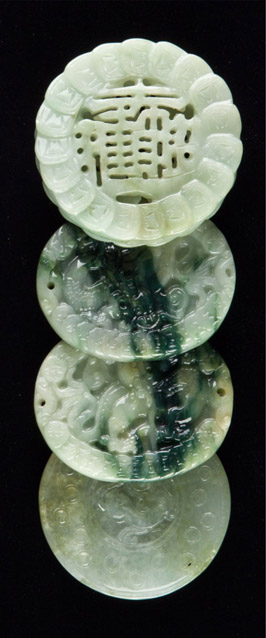
True jade is in fact jadeite. It is distinguished from serpentine by its cooler feel to the touch, color, translucency, and chemical composition. The best jadeite comes from Burma. The very best of Burmese jade is called Imperial and recognized by its bright translucent but vivid green. Because of trade embargos with Myanmar (modern day Burma) mines have closed and no new jadeite will come into circulation. Jade is therefore very expensive and in very limited supply. Jadeite is also available from China, but is typically of lower quality and value compared to Burmese, and is shown in the first photo.
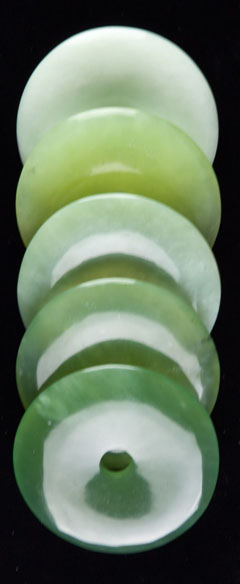
Because of the jade shortage, serpentine is now used routinely in place of jadeite. As the second photo shows, the green shades of serpentine which we refer to as celadon color, appear to look very much like jadeite. In this case, serpentine is often referred to as “New Jade” even though it is serpentine. “New” implies “the replacement for” traditional jadeite jade.
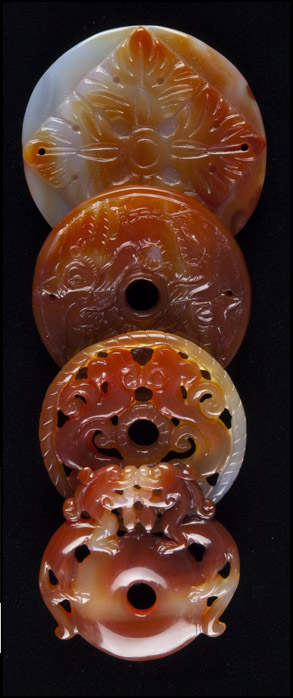
The photo of carved serpentine discs shows how the range of new jade serpentine spans from white, to a yellow-green, to a deep verdant green. Because of this, when you purchase a product that contains new jade, you can expect that the color of the specific item you receive will be somewhere in this range, but will not necessarily match the color of the specific product photo.
This is the beauty of natural minerals. No two pieces of stone are ever exactly alike. Yours will always be a one of a kind treasure.
Marbleized Serpentine
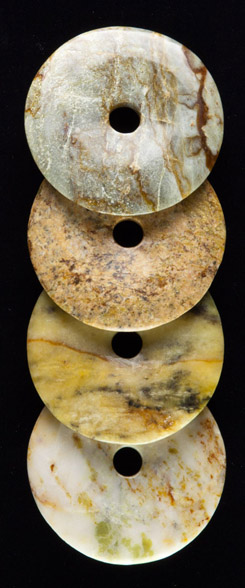
In addition to New Jade, we also use serpentine in its most natural form which is marbleized or veined, and comes in colors that vary from white to a grayed black. Golds, greens, and deep rusts are all part of the naturally occurring variations that make serpentine stone so interesting.
At this time the natural, marbleized stone is no longer available to the fine artisans who carve our medallions. As a result, designs which use marbleized serpentine will be strictly limited to the stones that we have on hand. Pieces containing marbelized stone will now be considered limited editions. Marbleized medallions are priced higher than other forms of serpentine.





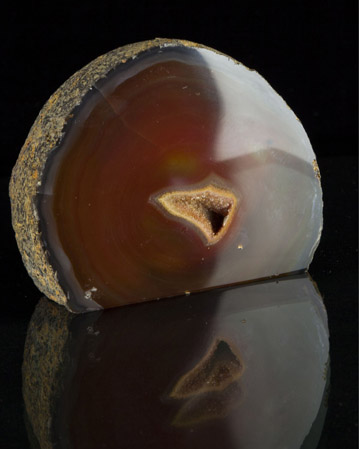
exterior of a
geode contrasts
with the
crystals inside







TRULYHUMAN products often include one of three different colored version of serpentine. These additional colors are shown in the photo in comparison to natural yellow.
The color we label as “Taupe” has been “burnt” or heat treated. The actual shade will very from a light camel-shade to a deep dark chocolate. “Poppy “ and “Blue” are color enhanced. The poppy shade varies from an orange tinged with yellow as shown, to a deep, dark orange-red. The blue is often in a shade that is similar to lapis lazuli.
With all of these three colors, care should be taken to keep the stones out of direct sunlight, as with repeated and prolonged exposure colors may fade.A word about heated gemstones. Because gemstones are formed by the earth’s own internal furnace, it is not objectionable that many semi-precious gemstones on the market today have been further heat treated in a laboratory to intensify color. For most minerals only a certified gemologist can differentiate between naturally heated and laboratory heated stones.

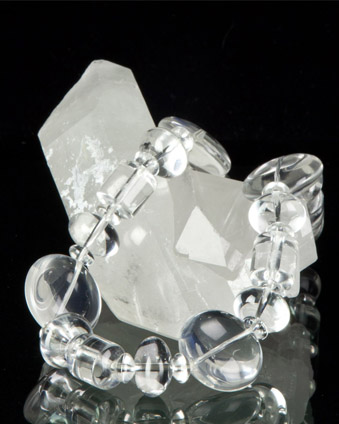
Clear rock quartz is the crystalline form of silica in which the molecules line up in a special six-sided symmetrical pattern based on the structure of a lattice. Quartz crystals are formed inside the core of the earth through an intense combination of heat and compression. The crystal structure offers the most efficient way to pack molecules together when there is very little space available. Most often volcanic action leads to the creation of quartz crystal. The volcano’s heat forces the molecules to vibrate at higher frequencies and expand and expand until no room is left. The molecules then compress forming their clear and exquisite crystalline structure.
Barbara's Jewelry Designs
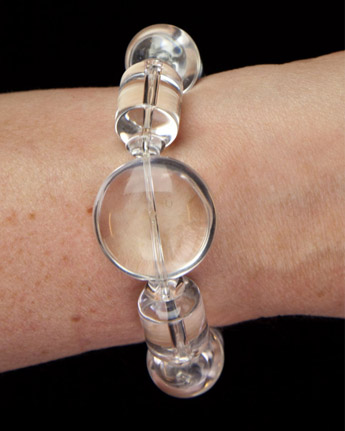

Rock quartz needs to be clearly distinguished from other “crystal” that is made of glass with added lead. While the latter is beautiful in the way that it creates a rainbow affect when light rays bounce off the crystal, it is not a naturally occurring stone; it is always synthetic and manmade. The most popular glass crystal is made by Swarovski.
Glass crystal has little affect on the looks of skin. This is because light rays striking glass crystal are bounced off the molecules. Usually the resulting reflected light effectively blocks the wearer’s skin from view.
Nature’s authentic crystal quartz behaves quite differently, allowing skin to glow through the crystalline structure which serves to smoothing out discolorations and small imperfections. Skin viewed through rock quartz is so much more luscious that it creates a special aura around the wearer, in a way that glass can never come close to duplicating.

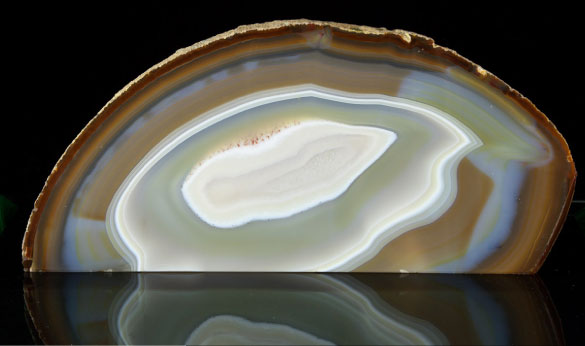
layers of colors
and quartz in
the center


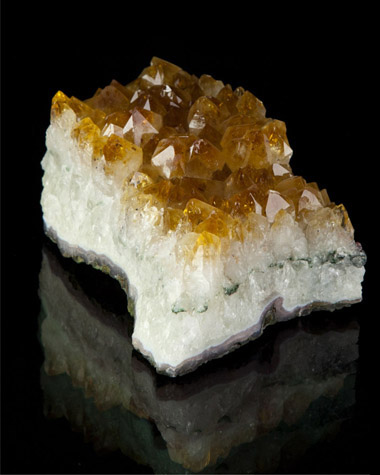
form the peaks
atop this quartz
no longer available
to our artisans for
new carvings

The Quartz Family
Geodes Hold the Secrets
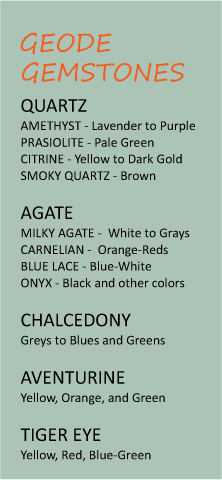
Volcanic action conspires with heat and compression to form a special kind of rock called a geode. When a volcano errupts, these rocks are hurled from the earth’s core to the surface. We like to think of geodes as our planet Earth’s form of rock candy. And each holds a special and unique secret inside. For when the rock’s hard and quite unattractive exterior is cracked open, the rough and ugly surface gives way to an exquisite array of crystals. Should you be able to acquire a small geode, say a hand-sized rock, you can smash it open and access the interior using a good strike with a hammer. The crystals found inside may vary in color, but those that are crystal clear and translucent are quartz. Crystal structures like these are essentially as strong as steel and form peaks that poke into the geode’s empty center space. But the structure of a geode is often in layers or bands of color.
These colored minerals also are members of the quartz family and related agate and chalcedony families-- all being based on similar lattice work molecular structure. These are all nature-made crystals.