

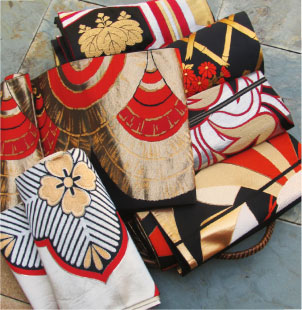
Looking through Japanese Obi designs is like having a glimpse into the entire history of textile patterns in both the Eastern and Western art traditions. Pre-World War II Obi bring forth the best use of complex geometry to create traditional Japanese elements, most often drawn from nature.
Post-WWII Obi reflect the influence of the West, and vividly demonstrate the various genres of art & interior design, from Art Deco to Impressionistic water-color like renderings, to the bold geometrics and abstracts of Modern and Post Modern art.
That is why Barbara personally selects each Obi we bring from Japan for their relevance to American interior design sensibilities, as well as their artistic merit and quality of workmanship.
By transforming one Obi into several re-designs we hope to transmit the tradition of Japanese textiles so that it may be treasured in many more homes and by several more generations.


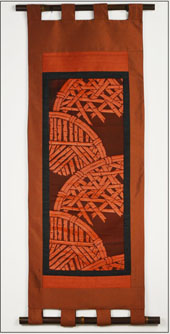

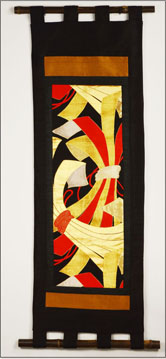


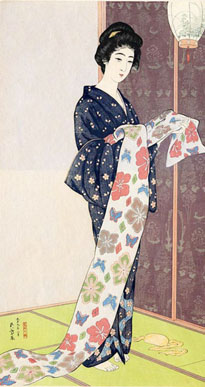



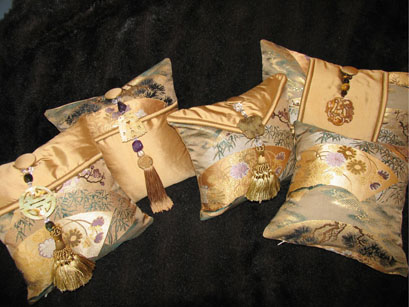
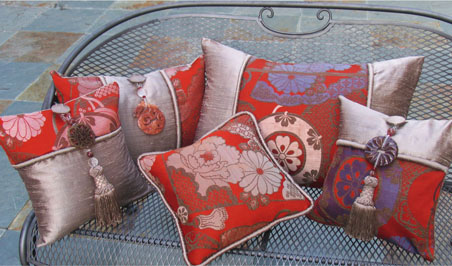
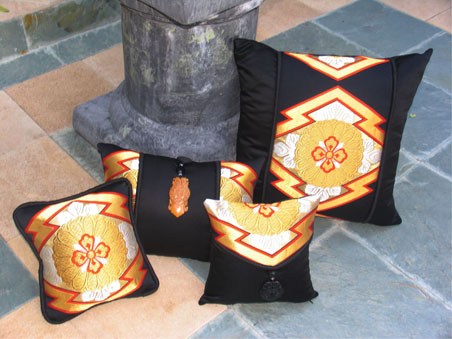
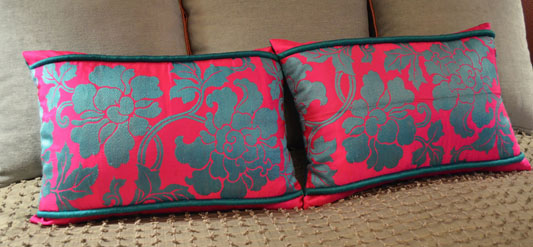
Pillows
featuring Obi
panels




TRULYHUMANmedallions

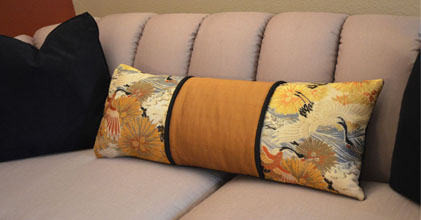
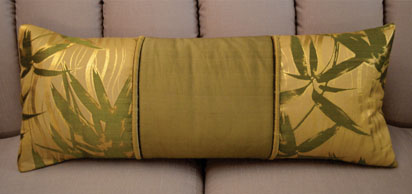


Please, keep these points in mind.
The Obi we use are from the twentieth century, dating Pre-WWII to approximately 1986. The oldest are referred to as vintage, while those woven after 1960 are considered quite old.
Gold and metallic threads, as well as the overall fabric may present with a rich patina that will continue to darken with age.
Silver and gold metallic are acheived by using gold and silver coated threads. Threads with very high sheen are also coated and called Urishi.
There will be snags and small areas of slight discoloration which are all considered part of the charm of these old textiles.
Permanent fold lines and wrinkles will sometimes be present, as most all obi have been worn and tied as part of formal Japanese dress.
The touch of obi vary greatly from soft to quite firm, even stiff tapestries. Some surfaces are very smooth while others are textural.
The sheen may be flat or nearly high gloss.
The obi presented are 100% silk or a silk and synthetic blend. Most often the synthetic fabric used in silk blends is Jinken or rayon.
The coordinating fabrics we use are 100% silk dupioni or taffetta. The reverse side of a pillow or wall hanging is always a solid coordinating silk. Usually this fabric is new. Very occasionally we are able to use solid fabric taken from the reverse side of an Obi.
It is best to place the fabric out of direct sunlight, which may cause fading and deterioration of fibers.
Please avoid cleaning, or if necessary, consult an experienced professional dry cleaner.
Storage of obi in sealed plastic should be avoided as it will hasten the deterioration of fabric fibers.


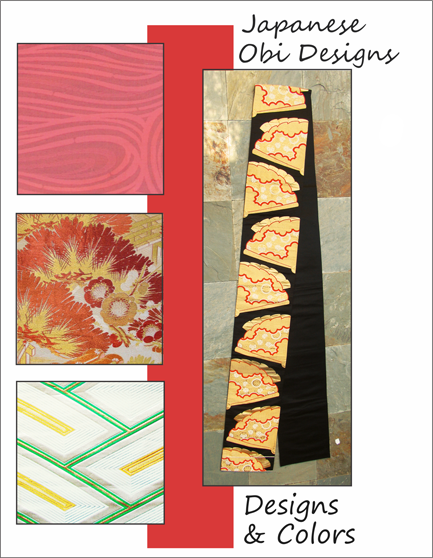
an array of Obi tapestries presenting a variety of
themes, patterns, textures and colors.

SOURCING SERVICES FOR OBI & KIMONO
Obi are beautiful used in their uncut form as table/buffet runners, and wall hangings. And Kimono make most dramatic design statements as wall art.
We are pleased to provide our customers with search services for both of these artistic treasures. E-mail us with your specifications, including whether vintage, old or new; the type of colors and/or specific design elements you seek, fabric content, and your budget.
We will provide you with photos of the results of our search for your consideration. Should you desire to purchase, items are only imported on a non-returnable basis.

Japanese Obi Re-Designs
Transforming the Traditional Kimono Sash
into new designs for you, your home and your legacy




