





CHINESE DRAGON
AND YOU JUST MIGHT BE SUCCESSFUL

Whether your goal is to lose weight, find a new loving relationship,
make a career move, or get rid of your couch potato lifestyle.
No matter the specific plan or tools you are using, focusing on the
Dragon just may help you get the life of your dreams. It's all part of
a simple five-step process for making every day contribute toward
your ultimate success.
A COMPLIMENTARY COPY OF "FIVE STEPS TO SUCCESS"
ACCOMPANIES EVERY DRAGONmedallion PURCHASE
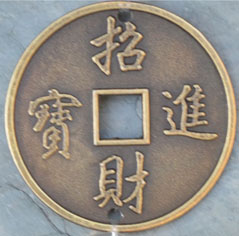


believed that the shape of the
square in the center would draw
money, and more generally, the
life goal of prosperity. The coins
were so popular that they also
became charms, with hundreds
of different wishes inscribed.
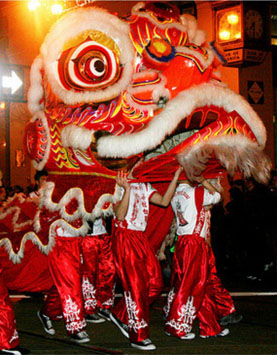

The Lore of the Dragon

REVERSE SHOWS
CALIGRAPHY
CHARACTERS
FOR A WISH
TO THE
DRAGON


You too possess this duality of capabilities for there is always a small bit of male in every female; there is always some light in the darkness. Another analogy can be drawn between creativity and accomplish- ment. You will use your feminine dimension to create and select your goal. But accomplishment is part of the energetic realm of the dragon. So become a dragon whenever you want to make a dream come true.
MALE
EMPEROR
LIGHT
DAY
ENERGY
YANG
PHOENIX
FEMALE
EMPRESS
DARKNESS
NIGHT
CALM
YIN
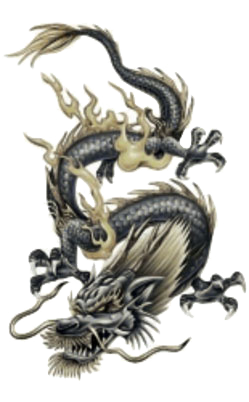

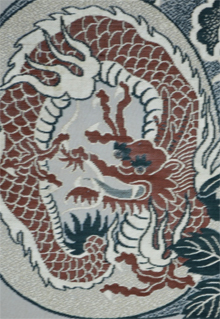
In ancient Chinese culture, the Dragon was the most auspicious of all mythical creatures. It became synonymous with the emperor and its form could only be worn by the emperor, usually on bright gold robes. Tradition assigns the sides of the dragon as yellow, with a reddish underbelly and green streak along its back and tail. The dragon’s form is a combination of different animals, including a camel’s head, deer antlers, carp scales, tiger eyes and eagle claws.
Eastern dragons never have wings, unlike their counterparts in the West, nor do they breath fire. As a most positive symbol, the Chinese dragon is associated with the ability to take in water, and breath out energy or “Chi.” This Chi is what forms the basis of Feng Shui.
People would call on the dragon to bring water for their crops, or to end a drought. Large plates depicting double dragons were often placed behind the handles at a home’s front door, so that if a fire starts, the dragon would bring the rain to protect all those living inside. And because of its power over rain and the oceans, the dragon is the most powerful symbol for achievement. The dragon is also associated with sunrise and light, as well as good beginnings and good fortune.
The folklore and form of the dragon was spread from China to Japan, and later Korea, by Buddhist Monks. While the Chinese dragon has five claws, the Japanese Dragon has only three. Dragons are frequently found at the entrances to Japanese temples.
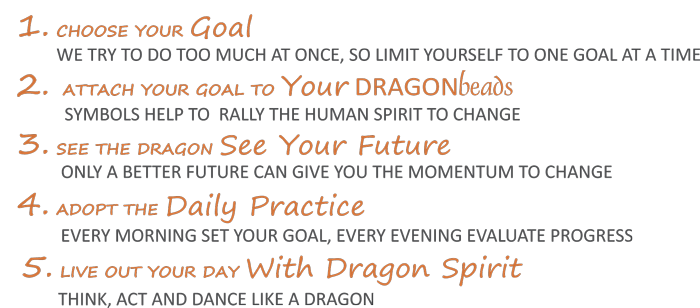
to live with success
change is one of the most difficult to master. It takes
dedicated daily practice to build this skill set. But once learned,
it will forever be with you as you seek the life of your dreams.


progress come with every DRAGONmedallion




